http://www.nsalg.org.uk/news-events-campaigns/national-allotments-week/
Monday, 10 August 2015

Plot 55 - latest
The time was and is marching on and was running out of it to carry on trying to dig into the concrete soil on my plot, so gave in and paid a man to rotavate it.


Then we had rather a few days work of rain and I couldn't get to the allotment to do anything. Finally when I did. I work until the sun went down and the residual light failed building my raised beds.

Plot 55
Hunting the internet for different frames to grow runner beans up as bored (and not so good at the traditional one). Made use of 5 fence posts from my parents that are no longer required, a very handy helpful friend of theirs, some tools, canes and cable ties and this is the result, quite chuffed.


Allotment - Plot 55
So the manure has been left a while to do its work.


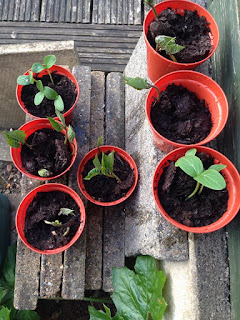

Meanwhile, I have been growing runner beams and cucumber plants from seed.


Thursday, 30 July 2015
Allotment updates
So not long after the first photo of my allotment did we set about clearing some of the weeds

It took ages just to clear a little section, firstly trimming back some of the long grass and then pulling it and other weeds from the roots


It took ages just to clear a little section, firstly trimming back some of the long grass and then pulling it and other weeds from the roots

Then added some manure
Its been a while
Not sure where the time has flown to since March.
I have taken over an allotment, I dont think it had much love and attention paid to it in the past and as such it is proving hard going to clear it and get it into any sort of order,

I have taken over an allotment, I dont think it had much love and attention paid to it in the past and as such it is proving hard going to clear it and get it into any sort of order,

Friday, 6 March 2015
March - flowers 2 of 2
General maintenance
Continue to deadhead winter-flowering pansies and other winter bedding. Pansies will carry on into the spring and even to early summer, if attended to frequently.
Deadhead the flowers daffodils as they fade, but allow the foliage to die down naturally.
Herbaceous perennials infested with couch grass and other perennial weeds should be lifted so the roots of the weeds can be removed. Improve the soil by digging in organic matter before replanting.
Clear up weedy beds before mulching. Lighter soils can be mulched now, but heavier soils are best left until March, when the soil is warmer. Mulching with a deep layer of organic matter helps to condition the soil, suppress weed growth, insulate plant roots from temperature fluctuations, and conserve soil moisture during the summer.
Bulbs coming up in the rock garden or in containers may benefit from overhead protection from the rain. A sheet of glass or perspex placed on piles of bricks will do the job.
Top dress spring-flowering alpines with grit or gravel to show off the plants and to help prevent stem rots. Mulch may need replacing after weed removal.
Improve the drainage of heavy soils by working in lots of organic matter.
Perennials putting on plenty of growth may need support by the end of the month.
Check whether containers need watering. Even at this time of year, they can dry out. Pots that are sheltered by eaves or balconies can miss out on any rainfall. If in doubt, check the compost at a hand’s depth to see if it feels dry. Aim to keep pots moist, not wet, and don’t let them dry out.
Pots and tubs benefit from topping up with fresh John Innes compost. Old compost can be removed and replaced with new if there is not much room for topping up.
Feed borders with a general-purpose fertiliser at the manufacturer's recommended rate.
It is best to get supports in early, so that the plants grow up through them, covering them discreetly. Adding rigid supports afterwards usually looks unattractive and results in bunched stems lacking sufficient ventilation. Criss-crossing strings from hidden or decorative posts work well, allowing stems to grow up in the gaps between strings.
In mild areas, you should remove winter coverings of fleece, straw, polythene etc, to prevent new shoots being damaged. In cold areas, you are best waiting until the risk of frost has passed.
Planning ahead :
You may wish to get your sweet pea wigwam growing supports ready. In mild areas, you can transplant young plants to the feet of the wigwam, using a light twine to tie them in.
Continue to deadhead winter-flowering pansies and other winter bedding. Pansies will carry on into the spring and even to early summer, if attended to frequently.
Deadhead the flowers daffodils as they fade, but allow the foliage to die down naturally.
Herbaceous perennials infested with couch grass and other perennial weeds should be lifted so the roots of the weeds can be removed. Improve the soil by digging in organic matter before replanting.
Clear up weedy beds before mulching. Lighter soils can be mulched now, but heavier soils are best left until March, when the soil is warmer. Mulching with a deep layer of organic matter helps to condition the soil, suppress weed growth, insulate plant roots from temperature fluctuations, and conserve soil moisture during the summer.
Bulbs coming up in the rock garden or in containers may benefit from overhead protection from the rain. A sheet of glass or perspex placed on piles of bricks will do the job.
Top dress spring-flowering alpines with grit or gravel to show off the plants and to help prevent stem rots. Mulch may need replacing after weed removal.
Improve the drainage of heavy soils by working in lots of organic matter.
Perennials putting on plenty of growth may need support by the end of the month.
Check whether containers need watering. Even at this time of year, they can dry out. Pots that are sheltered by eaves or balconies can miss out on any rainfall. If in doubt, check the compost at a hand’s depth to see if it feels dry. Aim to keep pots moist, not wet, and don’t let them dry out.
Pots and tubs benefit from topping up with fresh John Innes compost. Old compost can be removed and replaced with new if there is not much room for topping up.
Feed borders with a general-purpose fertiliser at the manufacturer's recommended rate.
It is best to get supports in early, so that the plants grow up through them, covering them discreetly. Adding rigid supports afterwards usually looks unattractive and results in bunched stems lacking sufficient ventilation. Criss-crossing strings from hidden or decorative posts work well, allowing stems to grow up in the gaps between strings.
In mild areas, you should remove winter coverings of fleece, straw, polythene etc, to prevent new shoots being damaged. In cold areas, you are best waiting until the risk of frost has passed.
Planning ahead :
You may wish to get your sweet pea wigwam growing supports ready. In mild areas, you can transplant young plants to the feet of the wigwam, using a light twine to tie them in.
Monday, 2 March 2015
March - flowers 1 of 2
Sowing and planting:
Hardy annuals can be sown in pots or modules to provide colour in the garden. In mild areas you can sow directly outside. Marking out irregularly shaped seedbeds and broadcasting drifts of different seed gives a more natural look.
Sweet peas can be sown outside this month. Place autumn-sown sweet peas in a sunny position, perhaps on a high shelf in the greenhouse that gets plenty of light. Sow summer bedding plants in a heated propagator or under glass.
Early spring is an ideal time to plant herbaceous perennials, including Geranium, Astrantia and Oriental poppies.
Plant summer-flowering bulbs. Prepare the soil first, to ensure that drainage is sufficient to prevent the bulbs rotting. Anemone coronaria tubers need particularly well-drained soils.
Plan a continuous crop of cut flowers for this summer. Perennials such as delphiniums and annuals can be grown to produce a useful and beautiful display.
When space becomes available in the greenhouse, pot up cuttings of tender perennials taken last summer and at the beginning of this year. Bulk up plant numbers by taking more cuttings from the largest of the new plants.
Indoor forced bulbs that were in the house for winter displays, but which have now finished flowering, can now be planted into the garden, taking care not to disturb the roots.
General maintenance
Continue to deadhead winter-flowering pansies and other winter bedding. Pansies will carry on into the spring and even to early summer, if attended to frequently.
Deadhead the flowers of Narcissus (daffodils) as they fade, but allow the foliage to die down naturally.
Herbaceous perennials infested with couch grass and other perennial weeds should be lifted so the roots of the weeds can be removed. Improve the soil by digging in organic matter before replanting.
Clear up weedy beds before mulching. Lighter soils can be mulched now, but heavier soils are best left until March, when the soil is warmer. Mulching with a deep layer of organic matter helps to condition the soil, suppress weed growth, insulate plant roots from temperature fluctuations, and conserve soil moisture during the summer.
Bulbs coming up in the rock garden or in containers may benefit from overhead protection from the rain. A sheet of glass or perspex placed on piles of bricks will do the job.
Top dress spring-flowering alpines with grit or gravel to show off the plants and to help prevent stem rots. Mulch may need replacing after weed removal.
Improve the drainage of heavy soils by working in lots of organic matter.
Perennials putting on plenty of growth may need support by the end of the month.
Check whether containers need watering. Even at this time of year, they can dry out. Pots that are sheltered by eaves or balconies can miss out on any rainfall. If in doubt, check the compost at a hand’s depth to see if it feels dry. Aim to keep pots moist, not wet, and don’t let them dry out.
Pots and tubs benefit from topping up with fresh John Innes compost. Old compost can be removed and replaced with new if there is not much room for topping up.
Feed borders with a general-purpose fertiliser at the manufacturer's recommended rate.
It is best to get supports in early, so that the plants grow up through them, covering them discreetly. Adding rigid supports afterwards usually looks unattractive and results in bunched stems lacking sufficient ventilation. Criss-crossing strings from hidden or decorative posts work well, allowing stems to grow up in the gaps between strings.
In mild areas, you should remove winter coverings of fleece, straw, polythene etc, to prevent new shoots being damaged. In cold areas, you are best waiting until the risk of frost has passed.
Planning ahead :
You may wish to get your sweet pea wigwam growing supports ready. In mild areas, you can transplant young plants to the feet of the wigwam, using a light twine to tie them in.
Hardy annuals can be sown in pots or modules to provide colour in the garden. In mild areas you can sow directly outside. Marking out irregularly shaped seedbeds and broadcasting drifts of different seed gives a more natural look.
Sweet peas can be sown outside this month. Place autumn-sown sweet peas in a sunny position, perhaps on a high shelf in the greenhouse that gets plenty of light. Sow summer bedding plants in a heated propagator or under glass.
Early spring is an ideal time to plant herbaceous perennials, including Geranium, Astrantia and Oriental poppies.
Plant summer-flowering bulbs. Prepare the soil first, to ensure that drainage is sufficient to prevent the bulbs rotting. Anemone coronaria tubers need particularly well-drained soils.
Plan a continuous crop of cut flowers for this summer. Perennials such as delphiniums and annuals can be grown to produce a useful and beautiful display.
When space becomes available in the greenhouse, pot up cuttings of tender perennials taken last summer and at the beginning of this year. Bulk up plant numbers by taking more cuttings from the largest of the new plants.
Indoor forced bulbs that were in the house for winter displays, but which have now finished flowering, can now be planted into the garden, taking care not to disturb the roots.
General maintenance
Continue to deadhead winter-flowering pansies and other winter bedding. Pansies will carry on into the spring and even to early summer, if attended to frequently.
Deadhead the flowers of Narcissus (daffodils) as they fade, but allow the foliage to die down naturally.
Herbaceous perennials infested with couch grass and other perennial weeds should be lifted so the roots of the weeds can be removed. Improve the soil by digging in organic matter before replanting.
Clear up weedy beds before mulching. Lighter soils can be mulched now, but heavier soils are best left until March, when the soil is warmer. Mulching with a deep layer of organic matter helps to condition the soil, suppress weed growth, insulate plant roots from temperature fluctuations, and conserve soil moisture during the summer.
Bulbs coming up in the rock garden or in containers may benefit from overhead protection from the rain. A sheet of glass or perspex placed on piles of bricks will do the job.
Top dress spring-flowering alpines with grit or gravel to show off the plants and to help prevent stem rots. Mulch may need replacing after weed removal.
Improve the drainage of heavy soils by working in lots of organic matter.
Perennials putting on plenty of growth may need support by the end of the month.
Check whether containers need watering. Even at this time of year, they can dry out. Pots that are sheltered by eaves or balconies can miss out on any rainfall. If in doubt, check the compost at a hand’s depth to see if it feels dry. Aim to keep pots moist, not wet, and don’t let them dry out.
Pots and tubs benefit from topping up with fresh John Innes compost. Old compost can be removed and replaced with new if there is not much room for topping up.
Feed borders with a general-purpose fertiliser at the manufacturer's recommended rate.
It is best to get supports in early, so that the plants grow up through them, covering them discreetly. Adding rigid supports afterwards usually looks unattractive and results in bunched stems lacking sufficient ventilation. Criss-crossing strings from hidden or decorative posts work well, allowing stems to grow up in the gaps between strings.
In mild areas, you should remove winter coverings of fleece, straw, polythene etc, to prevent new shoots being damaged. In cold areas, you are best waiting until the risk of frost has passed.
Planning ahead :
You may wish to get your sweet pea wigwam growing supports ready. In mild areas, you can transplant young plants to the feet of the wigwam, using a light twine to tie them in.
Thursday, 5 February 2015
Spring is in the air
Garden preparations for Spring
Protect new spring shoots from slugs
Plant shallots, onion sets and early potatoes
Plant summer-flowering bulbs
Lift and divide overgrown clumps of perennials
Top dress containers with fresh compost
Mow the lawn on dry days (if needed)
Cut back Cornus (dogwood) and Salix (willow) grown for colourful winter stems
Weeds come back in to growth - deal with them before they get out of hand
Start feeding fish and using the pond fountain; remove pond heaters
Open the greenhouse or conservatory doors and vents on warm days
Wednesday, 4 February 2015
Preparation for Spring
Tasks to undertaken in the garden in February
Prepare vegetable seed beds and sow some vegetables under cover
Chit potato tubers
Proctect blossoms on appricots, nectarines and peaches
Net fruit and vegetable crops to keep the birds off
Prune winter-flowering shrubs that have finished flowering
Divid bulbs such as snowdrops, and plant those that need planing 'in the green'
Prune Wisteria
Prune hardy evergreen hedges and renovate overgrown deciduous hedges
Prune conservatory climbers
Cut back deciduous grasses left uncut over the winter
Tuesday, 18 November 2014
Growing poppys

According to Christopher Grey-Wilson, in his book, Poppies, the name may orginate from the sound made by chewing the seeds, or from the Celtic word papa, a liquid food for infants, as poppy juice was given to crying babies to help them sleep.
There are about 50 botanical species, which grow wild over most of the world except the tropics, but there are many more named varieties in cultivation – the Royal Horticultural Society’s Plant Finder lists 374 kinds of poppy available to gardeners in this country.
They include perennials (plants that live for many years) biennials (plants that grow one year and flower the next, sometimes surviving a few years as short-lived perennials) and annuals (which grow and flower in the same season before dying).
Buy potted plants or grow from seed
Perennial poppies are best bought as named varieties in pots.
Biennials are sometimes sold in much the same way as bedding plants but are easy to grow from seed and annual poppies, are far better grown from seed.
Poppies thrive in
Well-drained soil and full sun.
Individual flowers normally only last for a day or so but each plant produces an awful lot of them over quite a long season.
Deadheading would take ages but by leaving the plants to set seed you’ll enjoy the fat seed-heads that follow on from them.
The Poppy

Although barely anything survived in the muddy wasteland of the Western Front, by a miracle of nature one flower not only bloomed but thrived. The fact that the flowers were bright scarlet added to the uncanny aptness of the symbolism: the fragile red petals vividly suggested the spilt blood of the millions of young men who had died, while the growth of these flowers against all the odds represented hope in the face of despair.
Since the end of the conflict the poppy has been an inter nationally recognised sign of remembrance.
Friday, 7 November 2014
Remembrance Sunday 9th November Services
Each year in November, the United Kingdom remembers the men and women who gave their lives in the two World Wars and subsequent conflicts.
11 November is known as Armistice Day, Remembrance Day or Poppy Day.
During the First World War, on the 11th hour of the 11th day of the 11th month in 1918, the guns of the Western Front fell silent after more than four years of continuous warfare. In many parts of the world, people observe a two-minute of silence at 11am on 11 November.

Remembrance Sunday is the second Sunday in November, the Sunday nearest to 11 November.
ASHFORD - Service at Ashford War Memorial, Fordbridge Road. Band of the Royal Engineers will lead the parade at 10.40am
CHERTSEY: Remembrance Sunday service at Lyne and Longcross Church, Lyne Lane, Lyne, Chertsey, KT16 0AJ at 10am concluding at the War Memorial outside
CHERTSEY: A Weekend of Remembrance - an exhibition commemorating the fallen of Lyne and Longcross at Holy Trinity, Lyne and Longcross Church, Lyne Lane, Lyne, Chertsey, KT16 0AJ from November 8 to 11
SHEPPERTON - Service at Shepperton War memorial, bottom of the High Street, at 10.30am
STAINES - Parade and service at Staines War Memorial, Town Hall, at 11am
BEDFONT: St Mary's, Bedfont Green at 9.30am followed by a wreath laying ceremony at 10.45am.
BRENTFORD: Brentford for a wreath laying ceremony followed by a service of remembrance at 10:45am.
CHISWICK: Procession leaving Chiswick Town Hall at 10.30am to proceed to the memorial for a wreath laying ceremony followed by a service of remembrance at Christ Church, Turnham Green.
CRANFORD: The war memorial for a wreath laying ceremony at 10.45am followed by a service of remembrance at Holy Angels Church at 11am.
FELTHAM: A service of dedication at the war memorial starting at 2.45pm.
HESTON: A service of remembrance at St Leonard's Church, Heston at 10.50am.
HOUNSLOW: A service of remembrance at Holy Trinity Church, High Street, Hounslow at 10am.
HANWORTH: A service of remembrance at the War Memorial. The parade will leave the Royal British Legion, 22 Cross Road at 10.15am.
ISLEWORTH: A service of remembrance at Isleworth Cenotaph at 11am. The parade commences at The Royal British Legion Club, 5-6 North Street, Isleworth at 10.30am.
11 November is known as Armistice Day, Remembrance Day or Poppy Day.
During the First World War, on the 11th hour of the 11th day of the 11th month in 1918, the guns of the Western Front fell silent after more than four years of continuous warfare. In many parts of the world, people observe a two-minute of silence at 11am on 11 November.
Remembrance Sunday is the second Sunday in November, the Sunday nearest to 11 November.
ASHFORD - Service at Ashford War Memorial, Fordbridge Road. Band of the Royal Engineers will lead the parade at 10.40am
CHERTSEY: Remembrance Sunday service at Lyne and Longcross Church, Lyne Lane, Lyne, Chertsey, KT16 0AJ at 10am concluding at the War Memorial outside
CHERTSEY: A Weekend of Remembrance - an exhibition commemorating the fallen of Lyne and Longcross at Holy Trinity, Lyne and Longcross Church, Lyne Lane, Lyne, Chertsey, KT16 0AJ from November 8 to 11
SHEPPERTON - Service at Shepperton War memorial, bottom of the High Street, at 10.30am
STAINES - Parade and service at Staines War Memorial, Town Hall, at 11am
BEDFONT: St Mary's, Bedfont Green at 9.30am followed by a wreath laying ceremony at 10.45am.
CHISWICK: Procession leaving Chiswick Town Hall at 10.30am to proceed to the memorial for a wreath laying ceremony followed by a service of remembrance at Christ Church, Turnham Green.
CRANFORD: The war memorial for a wreath laying ceremony at 10.45am followed by a service of remembrance at Holy Angels Church at 11am.
FELTHAM: A service of dedication at the war memorial starting at 2.45pm.
HESTON: A service of remembrance at St Leonard's Church, Heston at 10.50am.
HOUNSLOW: A service of remembrance at Holy Trinity Church, High Street, Hounslow at 10am.
HANWORTH: A service of remembrance at the War Memorial. The parade will leave the Royal British Legion, 22 Cross Road at 10.15am.
ISLEWORTH: A service of remembrance at Isleworth Cenotaph at 11am. The parade commences at The Royal British Legion Club, 5-6 North Street, Isleworth at 10.30am.
Let your lawns grow / have a wild area to your garden - help the bees, butterflies
http://www.telegraph.co.uk/gardening/11205984/Let-your-lawns-grow-wild-to-save-Britains-bees-gardeners-told.html
Scientists warn that British bees are in serious decline with 71 of our wild bee species under threat and more than 20 already extinct. Loss of habitat and forage are the main problems facing wild bees.
Since the Second World War, 97 per cent of the UK’s wild flower-rich grasslands have been wiped out due to modern farming practices and urban development.
Sarah Raven, the writer and television presenter who writes a regular gardening column for The Daily Telegraph, welcomed the plans. She said: “It is right that you should not mow your lawns.
“Daisies and dandelions are key for pollinators because dandelions flower from very early in the year, and then daisies take over and flower to late.
“Gardeners should also introduce crocuses and snow drops into their lawns because they will provide nectar and pollen early in the year when food is scarce. Queen bumblebees often starve in the early spring.”
Wednesday, 29 October 2014
Autmun 'October' Half Term Holidays
Things to do over the half term holiday
Kew Gardens, Royal Botanic Gardens Kew TW9 3AB
Wed 29 October to Sun 2 November
Deadly and disgusing plants and fungi
Get a taste – not literally – of the natural world's most sneaky and dangerous flora with this collection of special tours, displays and workshops at Kew Gardens.
Young visitors can follow clues and puzzles on a trail through the gardens to help save London from the evil Smedly Deadly and his poisonous plants, meeting some interesting characters along the way.
A Deadly Poisons Trail will introduce you to terrifying plants, including the tree favoured by serial killers and the beans with the world's highest toxicity.
Magical Mushroom workshops will take place on The Secluded Lawn each morning (11am-1pm) to help you find out more about fungi, and daily tours of the gardens revealing the darker side of plants will take place at noon (limited capacity – register with the guide 15 minutes beforehand). All this life-saving information is free with admission, so there'll be no excuses for plant-based risk-taking in future.
Kew Gardens, Royal Botanic Gardens Kew TW9 3AB
Wed 29 October to Sun 2 November
Deadly and disgusing plants and fungi
Get a taste – not literally – of the natural world's most sneaky and dangerous flora with this collection of special tours, displays and workshops at Kew Gardens.
Young visitors can follow clues and puzzles on a trail through the gardens to help save London from the evil Smedly Deadly and his poisonous plants, meeting some interesting characters along the way.
A Deadly Poisons Trail will introduce you to terrifying plants, including the tree favoured by serial killers and the beans with the world's highest toxicity.
Magical Mushroom workshops will take place on The Secluded Lawn each morning (11am-1pm) to help you find out more about fungi, and daily tours of the gardens revealing the darker side of plants will take place at noon (limited capacity – register with the guide 15 minutes beforehand). All this life-saving information is free with admission, so there'll be no excuses for plant-based risk-taking in future.
Monday, 13 October 2014
Stump removal using Epsom salts
interesting read courtesy of ehow.com
Epsom salt is the best substance to remove a tree stump if it is in your garden or lawn, since it enhances the quality of your soil.
Read more : http://www.ehow.com/way_5720752_epsom-salt-formula-stump-removal.html
Epsom salt is the best substance to remove a tree stump if it is in your garden or lawn, since it enhances the quality of your soil.
Application
- Drill holes in the top of the stump with a one inch spade bit. The number of holes you will drill is dependent upon how large the stump top is--start your holes three inches from the perimeter of the stump and keep them three to four inches apart until you run out of room. Bore the holes as deeply as you can--at least eight inches into the base of the stump. Pour 100 percent Epsom salt into the holes and add enough water to moisten the salt. This moisture will carry the salts into the cells of the tree, drying them out. Then use a mattock or grub hoe to uncover as much as the root structure as you can. Pour a thick layer of Epsom salt on all exposed roots to prevent to roots from carrying moisture and nutrients to the base of the tree.Larger stumps may take a month or two to die, so plan to reapply the Epsom salt every three weeks. Brittle, dark wood is dead; while soft, light wood will require another application of Epsom salt. A dead stump will decompose naturally, though you can speed the process by adding a high nitrogen fertilizer to the bore holes and around the base of the stump.
Read more : http://www.ehow.com/way_5720752_epsom-salt-formula-stump-removal.html
Thursday, 9 October 2014
Keeping your tools clean
Getting Started
The following steps will work on any type of shears such as pruning or garden shears, hedge shears, or edging shears, etc.
You will need the following:
The following steps will work on any type of shears such as pruning or garden shears, hedge shears, or edging shears, etc.
You will need the following:
- Dirty pruning shears
- A small bucket of water
- A small wire brush (about the size of a toothbrush)
- A sharpening file
- Some bleach
- Some oil, like WD-40
Cleaning
- Put some water in your bucket
- Take your small wire brush and start scrubbing
- No soap is needed, just water, and scrub vigorously over all the metal areas
- Stop when the metal is clean as shown on the right
Sharpening
- Place your sharpening file, available at any hardware or home improvement center, on the existing bevel so that it is sitting level and flush
- With short, firm strokes push the file away from you making sure the file is still flush with the existing bevel
- Work your way from the base of the shear all the way to the very tip
- This may take a few minutes if your shears are really dull and haven't been sharpened in a while
- Using your finger, VERY CAREFULLY, check to feel how sharp the blade is. DON'T CUT YOURSELF!
- Notice that when sharpened, the bevel is the same width as when you started
- When satisfied with the sharpness, take the file and smooth off the other side of the blade if any filings are hanging over
Disinfect
- Fill your bucket again, but this time with a 1 part to 10 parts water and bleach solution. 1 part bleach to 10 parts water
- This will give you a mild disinfectant. Simply wash the cleaned and sharpened shears in the solution for a few seconds and then allow to dry
- As a note, every time you are done using your pruning shears, you should disinfect them so you don't pass any plant diseases around next time you prune something
Coat With Oil
- Apply a very liberal coat of oil (I use WD-40 because it is so versatile) to your newly cleaned and sharpened pruning shears
- This will help prevent future rust from building up
- Oil also helps your pruners open and close smoothly without catching or sticking
- Use a rag or paper towel and wipe off any oil residue, leaving a thin coat of oil
Courtesy of http://www.weekendgardener.net/garden-tool-care/pruners-050805.htm
Friday, 22 August 2014
August bank holiday weekend activities - some suggestions
Saturday 23rd August
Lido Open Air Cinema - Stoke Road GuildfordSurrey GU1 1HB
This summer, Guildford Lido is proud to present its first ever Open Air Cinema. The popular family film 'Grease' will be screened in the beautifully landscaped gardens of the Lido on Saturday 23rd August. The evening will also include a swimming session from 7pm - 8pm as well as a bar, BBQ and of course fancy dress! The film will start at 9pm.
Standard £10.00
Standard with deckchair £12.00
Sunday 24th August
Wild Wood Adventure - Peacock Wood Stoke Guildford GU1 1HB
Book online and join in the fun of challenging yourself high in the trees. Let our staff look after you and kit you up with our Swiss made ‘Saferoller’ system that keeps you totally secure on the course while you have fun.
Our adult course is designed for anyone above 1.4m high and over 11 years old, there are wobbly bridges, balancing logs, gaps to jump, zips to zip and all kinds of different challenges to try. Some are easy, some not so easy and some really fiendish - but whatever your ability we have designed it to be exhilarating!
We have nearly 40 obstacles in the trees at various heights as you travel around in two huge loops into the woods both coming back to our 15m central tower where you can finish by trying our twin fast 100m zip wires. . . or dare to walk the plank on our 15m free fall descender or - if you really want - the stairs.
Monday 25th August
Bocketts Farm Park - Young Street Fetcham Leatherhead Surrey KT22 9BS
Daily activities include pony rides, tractor rides, gold panning, animal handling, goat milking and our famous pig racing! In addition, the Small Animal Village and Big Animal Barn are open where you can meet and feed all of the friendly farm animals.
£9.20 adults, £9.80 children 3-17years, £8.00 children 2yrs, £8.60 Seniors
Saturday and Sunday
Wings and Wheels 2014 - Dunsfold Park Cranleigh GU6 8TB
The sensational summer event for the whole family, Wings & Wheels, returns on Saturday 23rd and Sunday 24th August 2014 at Dunsfold Aerodrome in Surrey (home to BBC’s Top Gear) to celebrate its 10th show. Famous favourites in the air and on the ground will blow your mind, whilst the attractions and Zones in the Arena will keep you entertained and buzzing with delight the WHOLE weekend
Lido Open Air Cinema - Stoke Road GuildfordSurrey GU1 1HB
This summer, Guildford Lido is proud to present its first ever Open Air Cinema. The popular family film 'Grease' will be screened in the beautifully landscaped gardens of the Lido on Saturday 23rd August. The evening will also include a swimming session from 7pm - 8pm as well as a bar, BBQ and of course fancy dress! The film will start at 9pm.
Standard £10.00
Standard with deckchair £12.00
Sunday 24th August
Wild Wood Adventure - Peacock Wood Stoke Guildford GU1 1HB
Book online and join in the fun of challenging yourself high in the trees. Let our staff look after you and kit you up with our Swiss made ‘Saferoller’ system that keeps you totally secure on the course while you have fun.
Our adult course is designed for anyone above 1.4m high and over 11 years old, there are wobbly bridges, balancing logs, gaps to jump, zips to zip and all kinds of different challenges to try. Some are easy, some not so easy and some really fiendish - but whatever your ability we have designed it to be exhilarating!
We have nearly 40 obstacles in the trees at various heights as you travel around in two huge loops into the woods both coming back to our 15m central tower where you can finish by trying our twin fast 100m zip wires. . . or dare to walk the plank on our 15m free fall descender or - if you really want - the stairs.
Monday 25th August
Bocketts Farm Park - Young Street Fetcham Leatherhead Surrey KT22 9BS
Daily activities include pony rides, tractor rides, gold panning, animal handling, goat milking and our famous pig racing! In addition, the Small Animal Village and Big Animal Barn are open where you can meet and feed all of the friendly farm animals.
£9.20 adults, £9.80 children 3-17years, £8.00 children 2yrs, £8.60 Seniors
Saturday and Sunday
Wings and Wheels 2014 - Dunsfold Park Cranleigh GU6 8TB
The sensational summer event for the whole family, Wings & Wheels, returns on Saturday 23rd and Sunday 24th August 2014 at Dunsfold Aerodrome in Surrey (home to BBC’s Top Gear) to celebrate its 10th show. Famous favourites in the air and on the ground will blow your mind, whilst the attractions and Zones in the Arena will keep you entertained and buzzing with delight the WHOLE weekend
Wednesday, 20 August 2014
Gardens to visit in Surrey
As it is still the summer holidays (for many), I thought it would be nice to look up some places, gardens to visit in Surrey.
The Sculputre Park - Jumps Road, Churt, Farnham GU10 2LH
The Sculpture Park has been open to the public from April 2003 and has been an ongoing project since the year 2000. Over the years thousands of sculptures have been exhibited and the show is constantly changing with sculptures selling all through the year.
At first visitors walk right into the centre of the park where they will collect their guide from reception and start the two miles of trail, which on average takes around two hours to complete. All set within a valley fed by two natural springs the ten acres of arboretum and wildlife inhabited water gardens has set the stage for one of the finest and most eclectic selections of sculpture in Britain today.
Open 10 - 5
Tickets Adults £10, Concessions £5, Children under 5 free
Painshill - Portsmouth Road, Cobham KT11 1JE
Discover the crystal Grotto (limited opening times) and other mystical follies including the Gothic Temple, Ruined Abbey, Turkish Tent and Gothic Tower. See historic plantings and learn all about the John Bartram Heritage Collection of North American trees and shrubs (Plant Heritage, NCCPG). Other features include a restored Waterwheel, a Hermitage hidden in the woods and a Vineyard and amazing wildlife.
Frimley Lodge Park - Strut Road, Frimley, Camberley GU16 6HY
Its unspoilt natural beauty and character continues to attract large numbers of visitors with opportunities for families with, woodland and lots of open space, picnic areas, two children's playgrounds, a trim trail, miniature railway and meadows. There are also football, cricket pitches and a pitch and putt course available to hire.
Brooklands Museum - Brooklands Road, Weybridge, Surrey KT13 0QN
The Museum displays a wide range of Brooklands-related motoring and aviation exhibits ranging from giant racing cars, motorcycles and bicycles to an unparalleled collection of Hawker and Vickers/ BAC-built aircraft, including the Second World War Wellington Bomber, Viking, Varsity, Viscount, Vanguard, VC10, BAC One-Eleven and the only Concorde with public access in South East England.
Strawberry Hill House - 268 Waldegrave Road, Twickenham TW1 4ST
Horace Walpole created from 1747 the first landscape garden to be connected to a picturesque house. His 9 acres (3.64 hectares) contained a lawn and a meadow beyond, flanked by trees and an open terrace with views of the River Thames.
Denbies Wine Estate - London Road, Dorking, Surrey RH5 6AA
The Denbies Estate has been family owned and run since 1984. Denbies vineyard was planted in 1986, and since then has become one of the largest wine producers in the UK. Denbies core business is agriculture and we are pleased to be able to offer visitors an insight into wine production in the UK.
Hatchlands Park - East Clandon, Guildford, Surrey GU4 7RT
Hatchlands is set in a beautiful 430 acre Repton park offering a variety of parkland and woodland walks and a mini natural adventure area for children. It is renowned for its stunning display of bluebells in spring in the ancient woodland
The Sculputre Park - Jumps Road, Churt, Farnham GU10 2LH
The Sculpture Park has been open to the public from April 2003 and has been an ongoing project since the year 2000. Over the years thousands of sculptures have been exhibited and the show is constantly changing with sculptures selling all through the year.
At first visitors walk right into the centre of the park where they will collect their guide from reception and start the two miles of trail, which on average takes around two hours to complete. All set within a valley fed by two natural springs the ten acres of arboretum and wildlife inhabited water gardens has set the stage for one of the finest and most eclectic selections of sculpture in Britain today.
Open 10 - 5
Tickets Adults £10, Concessions £5, Children under 5 free
Painshill - Portsmouth Road, Cobham KT11 1JE
Discover the crystal Grotto (limited opening times) and other mystical follies including the Gothic Temple, Ruined Abbey, Turkish Tent and Gothic Tower. See historic plantings and learn all about the John Bartram Heritage Collection of North American trees and shrubs (Plant Heritage, NCCPG). Other features include a restored Waterwheel, a Hermitage hidden in the woods and a Vineyard and amazing wildlife.
Frimley Lodge Park - Strut Road, Frimley, Camberley GU16 6HY
Its unspoilt natural beauty and character continues to attract large numbers of visitors with opportunities for families with, woodland and lots of open space, picnic areas, two children's playgrounds, a trim trail, miniature railway and meadows. There are also football, cricket pitches and a pitch and putt course available to hire.
Brooklands Museum - Brooklands Road, Weybridge, Surrey KT13 0QN
The Museum displays a wide range of Brooklands-related motoring and aviation exhibits ranging from giant racing cars, motorcycles and bicycles to an unparalleled collection of Hawker and Vickers/ BAC-built aircraft, including the Second World War Wellington Bomber, Viking, Varsity, Viscount, Vanguard, VC10, BAC One-Eleven and the only Concorde with public access in South East England.
Strawberry Hill House - 268 Waldegrave Road, Twickenham TW1 4ST
Horace Walpole created from 1747 the first landscape garden to be connected to a picturesque house. His 9 acres (3.64 hectares) contained a lawn and a meadow beyond, flanked by trees and an open terrace with views of the River Thames.
Denbies Wine Estate - London Road, Dorking, Surrey RH5 6AA
The Denbies Estate has been family owned and run since 1984. Denbies vineyard was planted in 1986, and since then has become one of the largest wine producers in the UK. Denbies core business is agriculture and we are pleased to be able to offer visitors an insight into wine production in the UK.
Hatchlands Park - East Clandon, Guildford, Surrey GU4 7RT
Hatchlands is set in a beautiful 430 acre Repton park offering a variety of parkland and woodland walks and a mini natural adventure area for children. It is renowned for its stunning display of bluebells in spring in the ancient woodland
Subscribe to:
Posts (Atom)